If you feel a residue after using wax, hairspray, or dry shampoo that doesn’t wash out with a regular shampoo, you might want to consider using a clarifying shampoo. These products are designed to help remove residue that can build up on the hair and scalp. However, an oily appearance alone doesn’t necessarily mean you need a deeper cleanse.
To make the right choice, you should consider the styling products you use, your shampooing routine, and how your hair feels after washing. The frequency of use is determined by the product’s instructions and your hair’s needs. Especially for colored or dry hair, the after-wash care routine is also part of this assessment.
The Role of a Clarifying Shampoo in Removing Product Build-Up from Hair
Styling products can leave residue on hair strands to maintain the hair’s shape, add texture, or change its appearance. When these products are applied repeatedly to the same areas and washing doesn’t remove the residue thoroughly, the hair’s natural movement may change. The purpose of a clarifying wash is to help remove these buildup. This does not mean you need to perform a separate clarifying wash after every use of a styling product.
When deciding whether you need to remove styling product residue, consider how well your daily shampoo cleans your hair. If your hair combs through easily, styles well, and doesn’t feel coated after washing, you may not need to add an extra product to your routine. Don’t judge whether your hair is clean enough by whether it feels stiff or squeaky; the goal is to remove residue while also taking care of your hair’s needs.
Do Stickiness, Dullness, and a Heavy Feeling in the Hair Indicate Product Buildup?
If your hair strands stick together after washing, look duller than usual, or feel coated to the touch, this may be related to product buildup. Especially if these changes began during a period when you were using more styling products, you may want to reassess the amount you’re using and the areas where you apply them. However, none of these symptoms alone can provide a definitive diagnosis.
Dullness may also be related to how dry your hair is; a heavy feeling, on the other hand, may result from applying too much product or not rinsing it out thoroughly enough. First, make sure you’re rinsing all areas of your hair thoroughly during your current wash. Then, reduce the amount of styling product you use and observe how your hair feels. This way, instead of opting for a more thorough wash based on a single observation, you can identify the connection between your habits and the changes in your hair.
How Can You Tell the Difference Between Wax, Hairspray, and Dry Shampoo Residue and an Oily Appearance?
Stickiness that becomes noticeable in the sections where you’ve applied wax, or stiffness that remains in the areas where you’ve sprayed hairspray, can serve as clues to help you evaluate your product usage. The powdery sensation that develops after reapplying dry shampoo to the same area can be assessed in a similar way. In these examples, knowing where the sensation begins and which application triggered it provides more insight than simply observing the hair’s shine.
Even on days when you don’t use styling products, the oily appearance at the roots shouldn’t be attributed solely to product buildup. In fact, oil and styling product residue can be present at the same time. When distinguishing between the two, consider the time that has passed since your last wash, the areas where you applied the product, and any changes you notice after washing. Instead of jumping to conclusions based solely on appearance, compare how your hair behaves under similar conditions.
How Should a Clarifying Shampoo Be Used According to the Product Label?
Before use, read the usage instructions on the packaging; the amount, application area, and rinsing instructions may vary by product. Do not extend the processing time on your own or assume that you must repeat the application in order to clean your hair more thoroughly. Double-shampooing, unless specified in the instructions, is not a standard usage practice for all products. Referring to the current packaging of the product you have on hand will help ensure you follow the application instructions correctly.
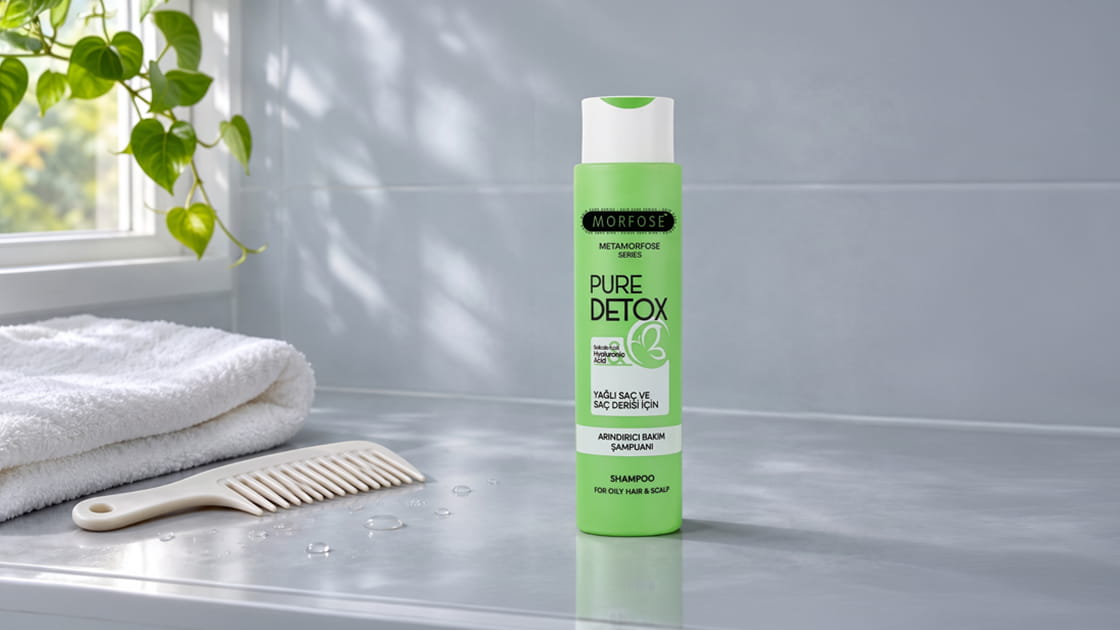
The official instructions for using Morfose Metamorfose Pure Detox Shampoo are to apply a generous amount to wet hair, massage it into the scalp with your fingertips to work up a lather, and then rinse thoroughly with lukewarm water. These instructions do not specify a waiting period or require a second application. During application, use your fingertips instead of scratching with your nails, and be sure to rinse thoroughly so that the water reaches all areas of the hair.
How Do You Determine How Often to Use a Clarifying Shampoo?
There is no set usage schedule tied to a specific day of the week; this applies to everyone. You should consider how often you use styling products, the amount you apply, how effectively regular washing removes residue, and the condition of your hair after washing. If the label specifies a frequency of use, follow those instructions. If not specified, do not assume a mandatory daily or weekly routine based solely on the product’s name.
Before increasing your use of clarifying shampoo, consider why your current routine isn’t working. Applying styling products day after day or using too many hair care products can contribute to a recurring buildup. If you notice noticeable stiffness, tangles, or dryness after washing, reassess whether the product is right for your hair rather than increasing how often you wash it. Your hair’s needs are determined not just by the number of products you use, but by how your hair responds to them.
Post-Cleansing Care for Colored or Dry-Prone Hair
When choosing products for colored hair, check the product’s description to ensure it’s suitable for colored hair. The fact that a product is labeled as a “clarifying shampoo” does not necessarily mean it provides color protection on its own, is sulfate-free, or will definitely alter the color. These characteristics depend on the specific formula. Especially for recently colored hair, choosing a cleansing product while also following the care instructions provided by your hair color brand will help you establish a more consistent routine.
After washing, choose your conditioning product based on the needs of your hair lengths and ends. If your hair feels dry or tangled, you can apply a conditioner or mask suitable for your hair type according to its usage instructions. You don’t have to layer multiple conditioning products on top of each other with every wash. If your hair tends to get weighed down easily, carefully adjust the application area and amount; rinse out the products thoroughly and reassess how your hair feels after washing.