
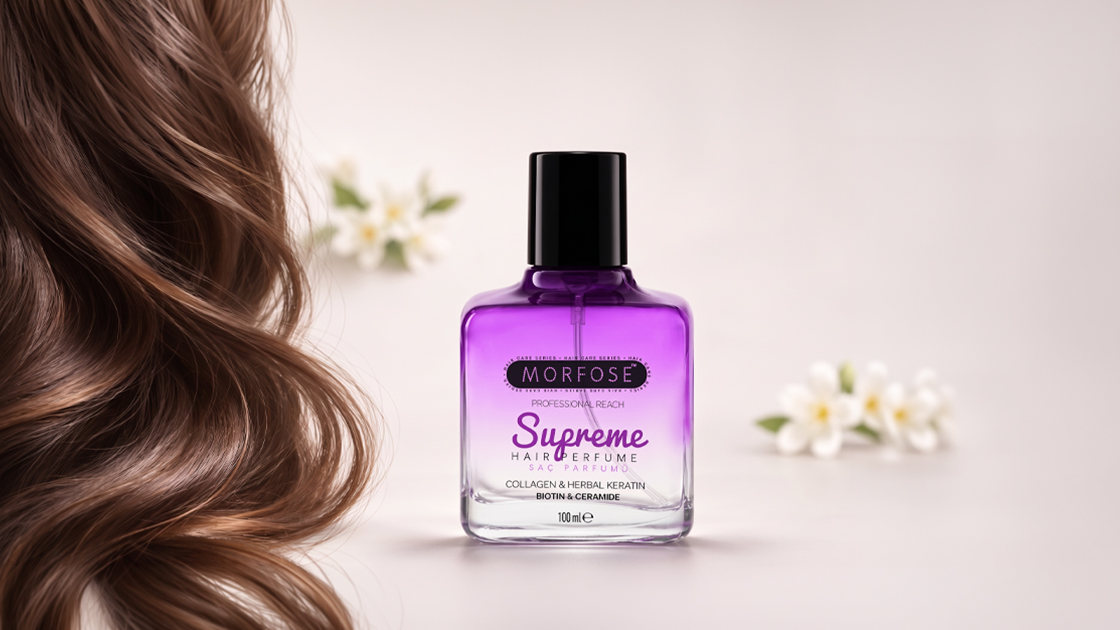
Hair perfume is a product formulated to give hair a pleasant scent. Hair perfumes that contain conditioning ingredients can also help keep hair looking vibrant and shiny. Follow the instructions on the product packaging regarding where to apply it, how much to use, and whether to apply it to dry or damp hair.
Making the right choice isn’t just about liking the scent. The scents of the shampoo, leave-in treatments, and body perfume you use can also influence the overall sensory experience. When adding a product to your routine, you can consider the application conditions, your personal scent preferences, and whether you’ll need to reapply it throughout the day.
What Is Hair Perfume Used For?
You can use hair perfume as part of your daily routine or throughout the day to refresh the scent of your hair, following the product’s instructions. The conditioning benefits vary depending on the formula. Shampoo remains an essential part of your routine for cleansing your hair, and products designed for specific care needs also have their place in your routine.
Morfose’s Supreme and Milk Therapy hair perfumes are formulated not only to provide a pleasant scent but also to help keep hair looking vibrant and shiny. The Supreme formula contains collagen, plant-based keratin, biotin, and ceramides. The Milk Therapy formula, on the other hand, contains 12 amino acids, milk protein, and panthenol.
How Can You Tell from the Label Whether a Product Is Suitable for Hair?
Read the product name on the front of the package, as well as the intended use and instructions on the back. The first criterion for selection is that the product must clearly state it is suitable for use on hair. A general description such as “perfumed spray” may not indicate that the product is designed for hair. Do not assume a product intended solely for skin use is suitable for your hair simply because it has a similar scent or the same spray mechanism.
Next, review the application instructions, warnings, and ingredient list. If you’ve previously experienced sensitivity to an ingredient, don’t base your decision solely on the product’s name or scent description. If you notice any discrepancies between the packaging and the online descriptions, clarify the instructions for the product you have on hand. If the intended area of use or the condition of the hair is not specified, ask the manufacturer for clarification rather than trying to fill in the missing information yourself.
Applying Hair Perfume According to the Label Instructions
Before beginning application, check the hair type, application area, and amount specified on the packaging. These three factors should be considered together; do not directly apply the usage instructions for one product to another. Since the spray mechanism and formula of the bottle may vary, it is not appropriate to specify a single application amount that applies to all options. If listed on the label, follow the preparation steps as well.
When spraying, be careful not to direct the product toward your face or eyes; also follow the other warnings on the packaging. Do not exceed the amount specified in the instructions in order to achieve a stronger scent. After application, evaluate how the product feels in your hair. If the scent is stronger than expected, this may indicate that you should reconsider your choice of product or the amount allowed by the instructions for your next use.
What Should the Condition of the Hair Be Before the Treatment?
Follow the product’s specific instructions regarding whether to apply it to dry, damp, or wet hair. For example, the official instructions for Morfose The Original recommend applying it to dry hair. If a product simply states “after showering,” this does not automatically mean it can be applied to wet hair; be sure to check the instructions regarding the hair’s condition.
Where and How Much Should You Spray Hair Perfume?
Limit the application area to the area specified on the packaging; just because a product is formulated for hair does not mean it can be applied to the scalp. If a specific amount or number of sprays is provided, follow those instructions. If not specified, do not estimate exact numbers based on hair length. Similarly, instead of assuming a standard spray distance for all products, follow the instructions provided for the specific product you have chosen.
How Do You Incorporate Hair Perfume Into Your Hair Care and Styling Routine?
Determine the product’s place in your routine, taking into account the application instructions for the other products you use. For example, if you’re using a product designed for dry hair, you can apply it at the end of your daily routine-after you’ve washed, conditioned, and dried your hair. This example is intended to address the condition of dry hair; it does not imply a mandatory order for all formulas. Be sure to follow the specific usage instructions for your leave-in treatment as well.
If you’re using a heating tool, do not place the scented product on the heat shield, and do not apply it before using the tool unless otherwise instructed. Evaluating the product after you’ve finished preparing your hair will help you avoid this uncertainty. If you’ve already applied a scented cream or oil to your hair, pay attention to the resulting scent; adding a new product to your routine doesn’t mean you need to use more product at every step.
Scent Preferences and Compatibility with Other Products When Choosing a Hair Perfume
If you like fragrances where jasmine and white flowers take center stage, you might want to try Morfose Supreme Hair Perfume. Supreme opens with notes of red fruit and is rounded out with notes of sandalwood, cedar, and musk.
If you enjoy sweet, milky scents, you might want to try Morfose Milk Therapy Hair Perfume. The milky note is complemented by caramel and vanilla. When making your choice, be sure to consider how the scent will blend with your shampoo, conditioner, and body perfume.
What Should You Keep in Mind When Reapplying Hair Perfume Throughout the Day?
Don’t tie your decision to reapply to a fixed time frame. The perception of the scent can vary depending on the amount used, other scented products applied alongside it, and your surroundings. First, check the product instructions to see if they allow for reapplication during the day. Just because you notice the scent less doesn’t necessarily mean it has completely faded; therefore, assess the current intensity before applying more.
When using the product again, consider how your hair feels and your surroundings. A strong scent in enclosed or shared spaces may be bothersome to those around you. If your hair feels unpleasant, do not layer on additional products. Instead of trying to satisfy your desire for scent through constant application, reassess the intensity of your preferred scent and its use in combination with other scented hair care products the next time you use it.