
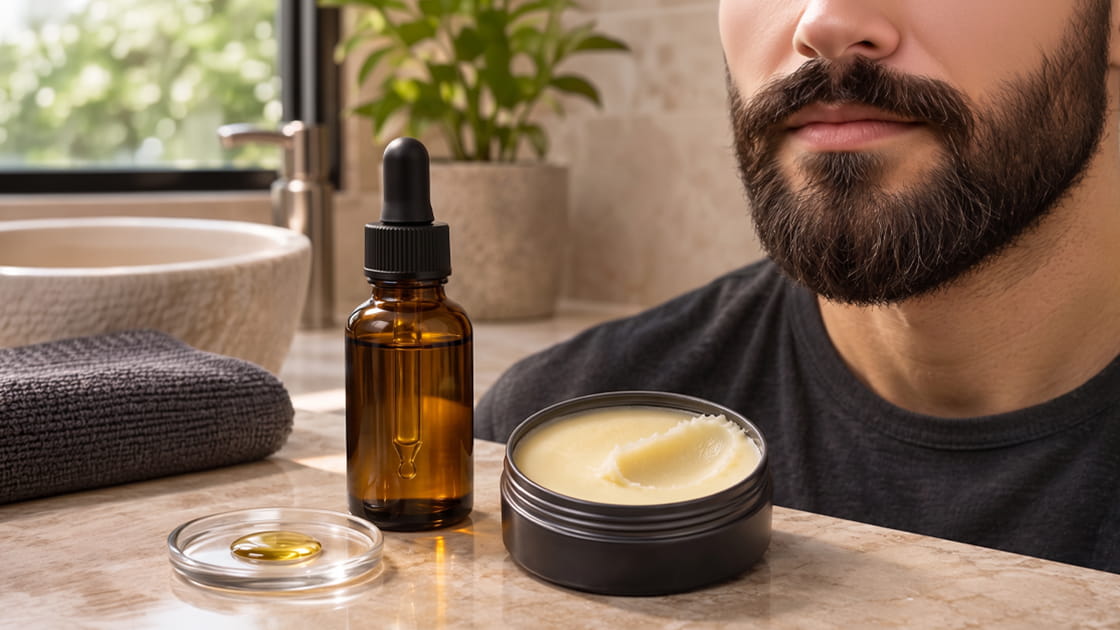
If softness and a nourished feel are your top priorities, opt for beard oil; if you also want to style your beard, you can choose a balm designed for that purpose. Rather than basing your choice solely on beard length, you should consider the texture of your beard, the function you expect from the product, and the look you prefer after application. In both cases, the result depends on the product’s formula and the amount you use.
When deciding whether to use beard oil or beard balm, consider which need your current routine isn’t meeting. If a single product meets your expectations, you don’t need to use both; if your needs for care and styling differ, you can evaluate your options accordingly.
Key Differences in Texture, Intended Use, and Finish
The difference between beard oil and balm is primarily evident in the product’s texture and intended use. While oils have a fluid consistency, balms can be thicker; however, not all balms have the same ingredients or level of firmness. Just because an oil provides a nourishing feel doesn’t mean it will style the beard in a specific way. Similarly, the term “balm” alone does not guarantee a strong hold, a matte finish, or a specific ingredient.
While the Ossion Premium Barber Line Beard Oil from the Morfose product line is designed to promote a soft and well-groomed appearance, the Ossion Premium Barber Line Beard Care Balm is described as providing both softening and styling benefits. However, these products should not be associated with a specific hold level or matte finish. When comparing products, consider the product description, ingredient information, and usage instructions on the packaging together.
| Criterion | Beard Oil | Beard Balm |
| Tissue | It has a fluid consistency; the sensation of spreadability and absorption depends on the formulation. | It may be thicker; its consistency and ingredients vary depending on the product. |
| Purpose of Maintenance | It can be chosen to enhance softness and a well-groomed appearance. | In addition to maintenance, it may also serve the purpose of improving appearance. |
| Format Adjustment | It should not be assumed that it provides a shaping grip. | The shaping function and grip level should be checked in the product description. |
| End | The level of shine and the feeling of oiliness depend on the formula and the amount used. | Whether a finish is matte or glossy cannot be determined from the name “balm” alone. |
| Selection Criteria | Maintenance expectations, wire structure, and post-application feel are evaluated together. | In addition to maintenance expectations, the need to adjust the wires is assessed. |
Which One Should You Choose Based on Beard Structure and the Desired Look?
When choosing a beard oil, consider not only the length of your beard but also its density and how the hairs behave. A product that feels heavy on a beard with fine hairs may feel different on one with thicker hairs. For this reason, the grooming needs of two beards of the same length may vary. If the hairs stick together or appear overly shiny after application, this may indicate that you need to reassess the amount you’re using or the product you’ve chosen.
Your preferred finish is also an important part of the choice. Preserving the beard’s natural movement and taming stray hairs are two different goals. When evaluating a beard styling balm, make sure the product is actually designed for that purpose. Also, don’t confuse a beard care balm with an after-shave skin balm; similar names do not imply the same use or the same result.
The Effect of Hair Texture on Choice in Short and Long Beards
Even a short beard may have stiff hairs pointing in different directions; a long beard, on the other hand, may not always require significant styling. Observe how your beard looks after you’ve combed it. If the hairs fall into place easily, a maintenance-focused product may be sufficient. If you still need to tidy up the look, you might consider a balm specifically designed for this purpose.
Softness, Shape Adjustment, and Finish Preference
If your priority is a beard that feels softer to the touch, focus on the conditioning properties. If you want the hairs in certain areas to look neater, take a closer look at the styling properties as well. If you’re expecting a matte finish, don’t assume this based solely on the product type; if the finish isn’t specified, don’t categorize the product definitively as matte or glossy.
When Does It Make Sense to Use Beard Oil and Balm Together?
Using products together can make sense if a single product meets your care needs but you still want to adjust your hair’s appearance. For example, if you like the feel of the oil but want to tame some flyaways, you can add a balm-specifically designed for styling-to your routine. On the other hand, if the balm alone provides the softness and look you want, there’s no need to use oil as well. Base your decision on your unmet needs, not on the number of products.
Before combining the two products, try using each one on its own-this will help you understand how each one feels. When applying them together, using the same amount as you would for each product separately can lead to an excessive buildup of product in your beard. Follow the instructions on the packaging to determine the right amount for your beard density. Using more product does not necessarily mean better care or stronger styling results.
How Is the Application Order Determined According to the Product Instructions?
First, check the application, rinsing, and combination usage instructions for both products on dry or damp beards. If the instructions are appropriate, you can consider applying the styling balm after the oil used for conditioning; however, this order is not a universal rule. Do not assume there is a waiting period if it is not specified, and do not view mixing the products in your palm as a mandatory step.
How Do Excessive Quantities and the Wrong Product Choices Affect Appearance?
Applying too much product-depending on the formula-can cause the hairs to become heavy, stick together, or appear shinier than expected. Product that accumulates in certain areas, in particular, can leave an uneven appearance throughout the beard. In such a case, instead of layering on more product, reassess the amount you’re using and how you’re distributing it. For your next application, follow the instructions on the packaging to adjust the amount based on the density of your beard, and observe the resulting look.
A wrong choice, on the other hand, sometimes involves expecting a result that differs from the product’s intended function. Trying to achieve a noticeable hold with a styling oil or expecting a completely matte finish from a balm with no specified finish may not meet your expectations, even if you increase the amount used. First, clarify whether your need is for softness or styling control. If you experience a burning sensation, redness, or noticeable discomfort after application, do not dismiss this as a normal side effect of the product; discontinue use and seek professional evaluation if the symptoms persist.