
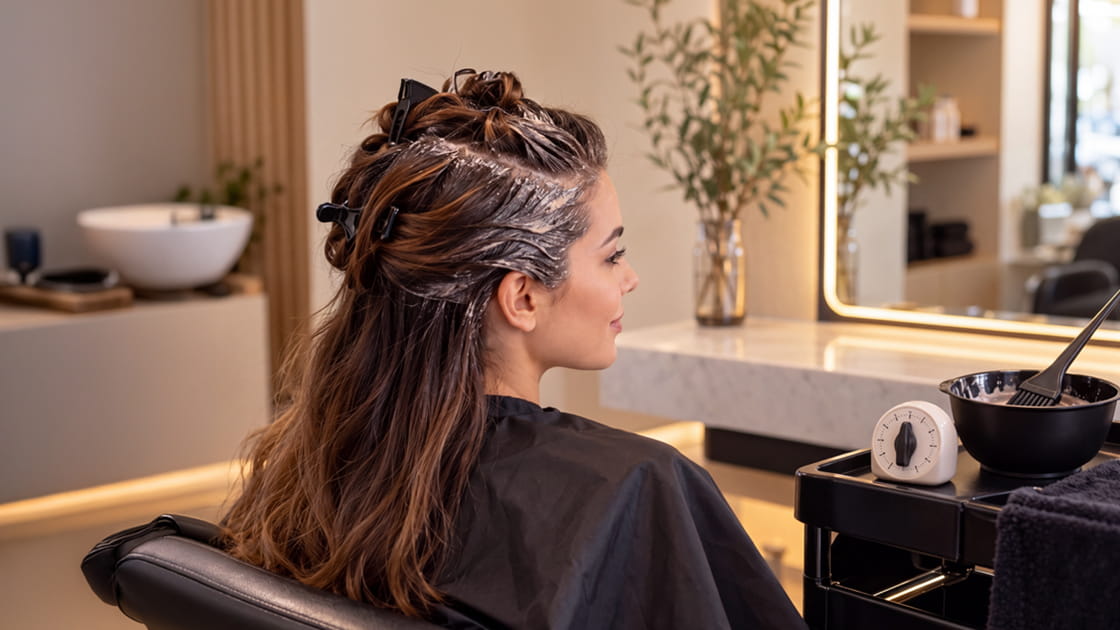
To achieve the desired result when dyeing hair, timing is just as important as color selection. Although the process is typically scheduled to last between 30 and 45 minutes for many permanent hair dyes, this timeframe does not apply to all products. The formula used, the selected shade, and the desired level of gray coverage can all affect the processing time. Therefore, when determining the processing time for hair dye, you should first consult the application instructions on the product packaging.
Leaving the dye on your hair for a longer time doesn’t necessarily mean the color will set better. Similarly, rinsing it out early based on how the mixture looks on your hair can make it harder to achieve the desired result. Knowing the processing time before you start, setting a timer, and treating the roots and previously dyed ends separately will help ensure the process proceeds more smoothly.
What Factors Affect the Processing Time for Hair Dye?
The key factors determining the processing time are the dye formula and the manufacturer’s recommended usage instructions for that product. The processing time may vary depending on whether the treatment is for permanent coloring, tone renewal, or gray coverage. The thickness of the hair strand, porosity resulting from previous treatments, and the starting color should also be taken into account. However, these factors do not mean that the upper limit specified on the packaging should be exceeded based on personal judgment.
When choosing from the Morfose hair color line, you should review the instructions for the specific series you plan to use. Rather than directly applying the processing time used in a previous coloring session to a different product, you should check the application instructions for the selected shade. In professional applications, the treatment is planned by evaluating both the hair’s history and the desired color; for at-home use, however, you should follow the steps recommended by the product.
Is the Processing Time the Same for Permanent and Semi-Permanent Hair Dyes?
You should not assume that permanent and semi-permanent hair dyes have the same processing time. The way these products work and their conditions of use may differ. You also cannot assume that a semi-permanent product will rinse out faster simply based on its name. The correct processing time should be determined by consulting the product’s instructions; you should not use the processing time of another type of hair dye as a guide.
When Does the Processing Time for Hair Dye Begin?
With many types of household paint, the timer is started after painting the area specified in the instructions is complete. However, there may be different steps for the first coat, a touch-up, or a multi-step coloring process. Therefore, instead of counting the time from the first brushstroke, you should check the starting point indicated in the product description. Especially if the base and tips are to be painted at separate times, the duration of each stage should be clearly defined in advance.
The application time during coloring should not be confused with the required waiting time afterward. Sectioning the hair in advance and having the necessary supplies ready prevents the application from taking longer than necessary. If the instructions specify, for example, that you should wait 30 minutes after application, the timer should be set accordingly. If the difference between the first and last sections dyed becomes too great, seeking professional assistance is a more controlled option.
How Long Should You Let Hair Dye Sit?
The duration of a root touch-up is determined by the instructions for the hair dye applied to the area with new growth. A standard permanent hair dye application may not yield results in the same amount of time as a product specifically formulated for quick root touch-ups. Therefore, it is not appropriate to shorten the processing time simply because the area to be dyed is small. The color of the new growth and the percentage of gray hair should also be taken into account in the application plan.
On previously colored hair, the primary goal is to match the root color to the existing length. For this reason, it is not always necessary to apply the mixture to the entire head of hair at the same time. If the instructions specify separate processing times for root application and color refresh, this distinction should be maintained. If there is a noticeable color difference along the length of the hair, the appropriate application method should be determined rather than attempting to even out the color by extending the processing time.
When Applying Root Touch-Up Dye, Should the Hair Shafts and Ends Be Left on for the Same Amount of Time?
Pre-colored sections and ends of the hair may not require the same processing time as new growth at the roots. The color may appear more intense, especially on porous ends. If the product instructions recommend a brief application during the final step for color refreshment, this should be followed. The processing time specified for the roots should not automatically be applied to the entire length of the hair.
How Long Should You Leave Hair Dye On to Cover Gray Hair?
When covering gray hair, it is important to allow the dye to process for the time recommended for that specific application. While some permanent dyes specify approximately 40-45 minutes for this process, the processing time may vary depending on the formula. In addition to the intensity of the gray hair and the structure of the hair shaft, the suitability of the chosen shade for coverage purposes should also be evaluated. Processing time alone is not sufficient; the mixing ratio and the even distribution of the dye across the relevant areas also affect the result.
For example, the instructions for Morfose 10 Hair Dyes specify a 45-minute processing time for gray coverage. This information should not be considered a general rule that can be applied to other product lines. Always follow the current instructions on the product’s packaging; do not arbitrarily extend the processing time if gray hair is not covered to the desired level. In such a case, the shade selection, mixture, and application technique should all be reviewed together.
What Happens If You Wash Your Hair Before the Recommended Time Has Passed?
Rinsing the dye before the specified time has elapsed may prevent the desired color from developing fully. In particular, when using a white cover-up, some areas may appear more translucent or different from other sections. However, the resulting outcome depends on the formula used, the initial hair color, and how early the process is stopped. The darkening of the mixture on the hair is not, by itself, a reliable indicator that the coloring process is complete.
When determining the rinse time, you should follow both the product instructions and the timer, rather than relying on the reflection in the mirror. If the desired color does not develop after rinsing early, the condition of the hair should be assessed before reapplying the dye on the same day. Conversely, if noticeable burning or irritation occurs during application, do not wait for the full processing time to elapse; rinse the product out thoroughly immediately. Do not continue with a treatment that causes discomfort just to achieve the desired color.
What Happens If You Leave Hair Dye On Longer Than Recommended?
Exceeding the recommended processing time does not guarantee a more lasting, brighter, or more successful color result. In some cases-particularly on pre-treated hair-the color may appear darker than intended. It is also not advisable to expose the hair and scalp to the product for an unnecessarily long time. Therefore, once the processing time has elapsed, you should proceed to the rinsing step as directed, even if the color does not yet look as expected.
When the timer goes off, you should complete the process as specified rather than letting the dye sit to rinse it off later. If the waiting time is accidentally exceeded, the product must be thoroughly rinsed without allowing additional time. When evaluating the results, keep in mind that wet hair may appear darker. If a noticeable difference in tone is visible after drying, it is better to seek professional advice rather than attempting to correct it with successive chemical treatments.
What Should You Do When the Hair Dye’s Processing Time Is Up?
Once the processing time is complete, proceed to the product’s rinsing instructions. While some hair dyes require adding a small amount of water first and gently distributing the mixture, others may recommend rinsing immediately. This step should not be assumed to be the same for every hair dye. Care should be taken to ensure no mixture remains at the roots or between thick strands, and the scalp should not be scrubbed vigorously during rinsing. The process should be continued until the cleansing steps specified by the product are complete.
The cleaning and care routine after coloring may also vary depending on the system used. While some products require follow-up with a suitable cleanser, others recommend only rinsing and using the care product provided with the kit. Therefore, instead of automatically following the same routine after every coloring session, you should check the instructions. Once the hair has been gently dried, the color result can be evaluated under appropriate lighting to plan the next care routine.