
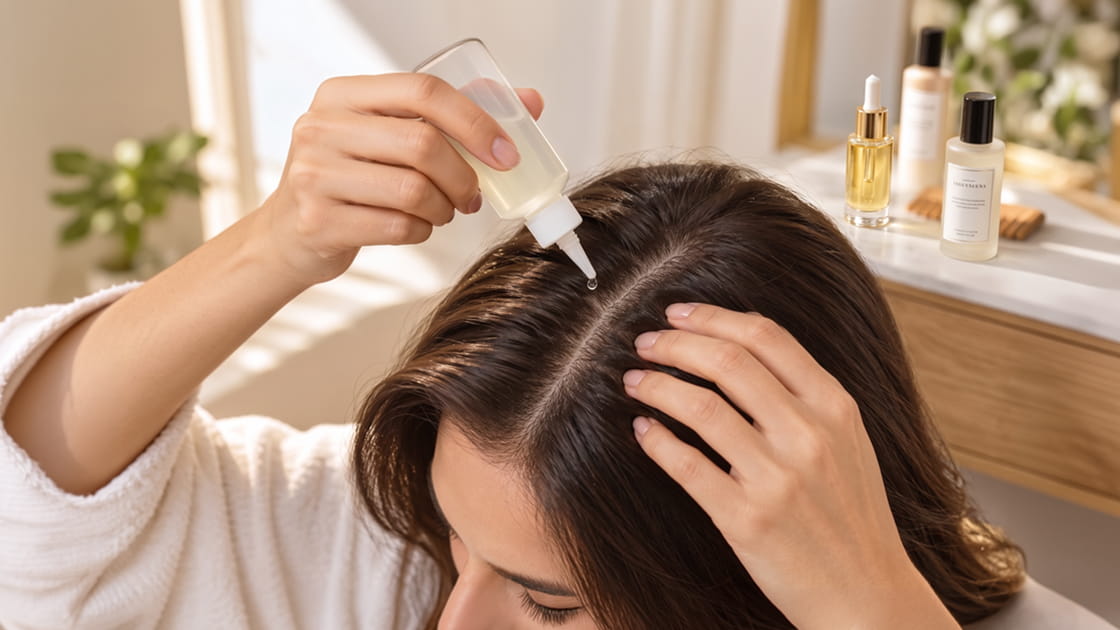
A hair tonic is a product that, depending on its formula, helps moisturize the scalp, enhance a sense of freshness, and support daily hair care. It is typically available in liquid form and is applied directly to the scalp. It serves as a complementary option for those who want to include scalp care in their routine rather than focusing solely on the length and ends of their hair. The expected benefits vary depending on the product’s ingredients and the needs of the scalp.
A properly chosen scalp tonic may be worth considering, especially for those who experience dryness or are looking for a gentler treatment for their scalp. However, it’s important not to assume that all tonics serve the same purpose. Cosmetic effects-such as hydration, a refreshing sensation, and improvements to the appearance of the hair strands-vary from product to product. When selecting a product, examining what specific need it was developed to address and how it should be applied allows for a more realistic assessment of the results you can expect from your hair care routine.
What Is a Hair Tonic, and What Role Does It Play in Your Hair Care Routine?
A hair tonic is a liquid cosmetic product developed to care for the scalp and, depending on the product’s intended use, the hair strands. Formulas may be water-based, contain alcohol, or be enriched with various conditioning ingredients. The fact that a product is packaged in a bottle specifically designed for a tonic does not mean that its ingredients and effects are the same as those of other options. Therefore, when evaluating a product, the ingredient list and the manufacturer’s usage instructions should be considered as carefully as the product name.
Its primary function in your daily routine is to provide the care your scalp needs. It does not replace rinse-off cleansers; you should continue to cleanse your hair regularly to remove dirt or styling product residue that builds up at the roots. Because it can target a different area than the care products applied to the ends of the hair, it serves a distinct function in the routine. The order of application is determined by product-specific instructions, such as whether the hair should be dry or damp and whether rinsing is required.
What Are the Benefits of Hair Tonic for the Scalp?
The benefits of hair tonics should be evaluated based on the functions of the ingredients in the product’s formula. Ingredients that help retain moisture can help reduce the sensation of dryness on the scalp. Some formulas, on the other hand, focus on providing a refreshing sensation after application. Options that are also recommended for application to the hair strands can help achieve a softer or more vibrant appearance. However, it is not realistic to expect a single product to provide all these benefits-such as moisturizing, oil control, and intensive care-at the same time. Morfose Cosmetics
A cooling sensation on the scalp is not proof that the product is working more effectively or that it is stimulating the hair follicles. Similarly, the product’s rapid absorption alone is not considered an indicator of effectiveness. When evaluating the benefits of a hair care treatment, one should consider the comfort of the scalp, how it feels after application, and the cosmetic changes the product is intended to produce. Complaints such as itching, noticeable redness, or persistent flaking should not be addressed solely by using a tonic.
Does Hair Tonic Reduce Hair Loss and Promote New Hair Growth?
It cannot be said with certainty that a cosmetic tonic definitively stops hair loss or promotes new hair growth in everyone. Hair breakage and hair loss at the root are two distinct conditions. The fact that a formula designed to care for hair strands provides a smoother appearance does not mean it eliminates the underlying cause of hair loss at the root. Similarly, the appearance of fuller hair should not be equated with the growth of new hair.
Focusing solely on product selection without evaluating the cause, duration, and pattern of hair loss may not be sufficient. If there is noticeable thinning, localized bald spots, or persistent heavy hair loss, a dermatologist’s evaluation is important. The presence of caffeine, biotin, or plant extracts does not, by itself, prove that a cosmetic product has a proven hair-regrowth effect. When evaluating such ingredients, data on the finished product and its stated intended use must be taken into account; cosmetic care and medical treatment should not be confused with one another.
For Which Hair and Scalp Types Is the Hair Tonic Suitable?
When choosing a tonic, the needs of the scalp should be assessed before considering whether the hair is straight, curly, or colored. A scalp that feels dry and hair roots that get oily quickly may not require the same formula. Those seeking hydration can opt for products specifically developed for this purpose, while those wanting to avoid a heavy feeling should choose lightweight formulas. For fine hair, the amount applied is also important; using too much product can leave residue at the roots or result in a flat, lifeless look.
For individuals with sensitive skin, the product’s scent, alcohol content, and refreshing ingredients should be examined separately. It should not be assumed that every formula containing alcohol will cause dryness in everyone, or that every plant-based ingredient is suitable for sensitive skin. Suitability depends on the formula as a whole and individual tolerance. If there is an open wound or visible irritation on the scalp, it is more appropriate to first assess the current condition rather than applying a new cosmetic product.
How Do You Use a Hair Tonic, and How Often Should You Apply It?
Before use, read the instructions on the packaging and determine whether the product is intended for the scalp, the hair strands, or both. If the tonic is to be applied to the scalp, divide the hair into sections and distribute it over the targeted area. Gently massaging with your fingertips helps spread the product; avoid rubbing vigorously with your fingernails. The amount used should not be increased arbitrarily based on hair density; instead, follow the manufacturer’s recommendations.
For example, for the Morfose Milk & Honey Hair Tonic, it is recommended to apply an adequate amount to the scalp, massage it in, and leave it on without rinsing. However, this method of use should not be generalized to all tonics. For daily or weekly application frequency, follow the instructions on the product’s label. Applying more product or using it more frequently than recommended does not guarantee faster results. The product’s own instructions also determine whether it should be applied to dry or damp hair.
When Do You Start to See the Effects of Hair Toner?
The time it takes to notice the effects varies depending on the expected change from the product. While sensory qualities, such as a feeling of freshness, can be noticed immediately after application, the contribution of moisture support to daily comfort can be assessed with regular use. It is not accurate to specify a precise number of days or weeks that applies to all toners. The formula, frequency of use, the initial condition of the scalp, and other hair care habits can all influence the observed results.
When evaluating products, it’s helpful to track changes in your routine rather than starting to use multiple new products at the same time. This makes it easier to determine which product is associated with any perceived comfort, heaviness, or sensitivity. Changes in hair density, however, should not be judged solely based on their immediate appearance. The product’s specified duration of use and intended purpose should be taken into account; if the expected effect is not observed, the suitability of the product for the need should be reassessed rather than increasing the dosage.
What Should You Keep in Mind When Choosing and Using a Hair Tonic?
Before you start selecting a product, you should determine whether your primary need is moisture, refreshment, or care for your hair strands. Then, you can compare the ingredient lists, application areas, and rinsing instructions. To evaluate options that suit your needs, you can review the product descriptions in the hair tonics category. Rather than focusing solely on a single ingredient highlighted on the packaging, understanding the specific care function the formula is designed to provide will help you make a more informed choice.
Avoid contact with the eyes while using the product, and follow the storage instructions and usage period after opening. If you experience any discomfort, such as a burning sensation, redness, or itching after application, discontinue use. Applying multiple concentrated products one after another to the same area can make it difficult to determine which product is causing which effect. Regular cleansing, applying the appropriate amount, and monitoring the scalp’s reaction are essential components of establishing a sustainable hair care routine.