
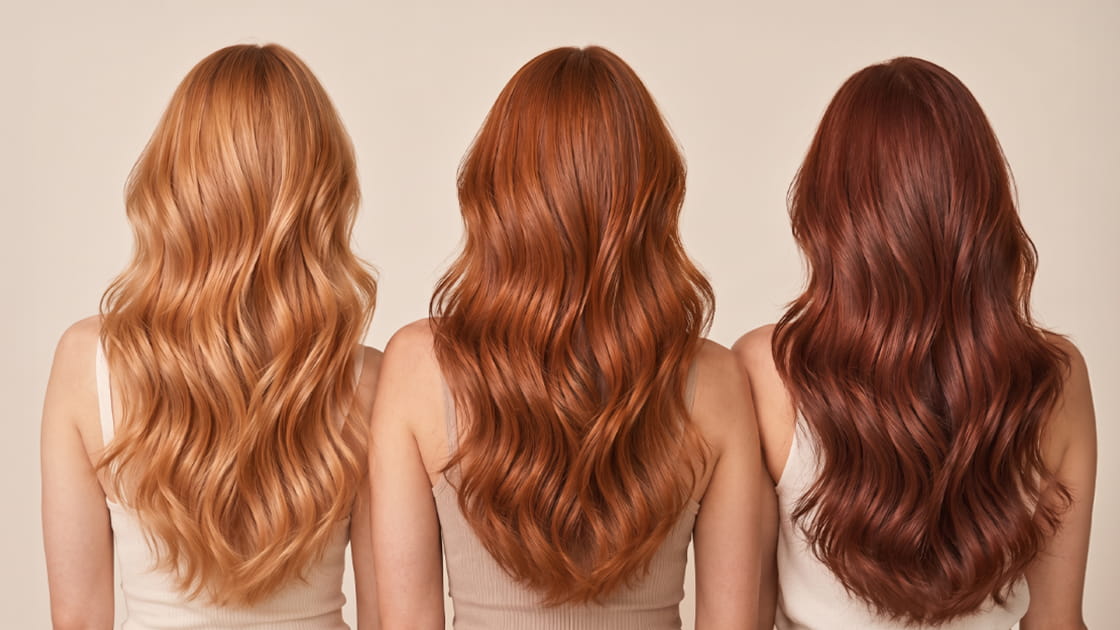
Copper hair offers a warm and eye-catching look created by the combination of orange and red highlights in varying intensities. Although they belong to the same color family, options ranging from light to dark-with shades dominated by cinnamon, gold, and red-create distinct effects. While some shades provide a softer, more natural transition, others make hair color the most striking feature of the look.
Simply looking at a photo you like isn’t enough to choose the right shade. The hair’s current lightness, previous coloring treatments, skin undertone, and desired contrast must all be considered together. Colors seen on digital screens, in particular, may differ from their actual appearance due to lighting and display settings. Therefore, examining color samples in natural light and considering your expectations in relation to your current hair base provides a more reliable starting point when making a decision.
What Are the Differences Between Copper Hair Color Shades?
The key characteristics that distinguish copper tones from one another are the color’s lightness and its dominant reflection. In lighter shades, orange and gold reflections appear brighter, while in darker shades, brown undertones may stand out. Red-dominant tones create a more pronounced color effect. In shades referred to as “cinnamon,” the warmth of copper typically blends with brown to create a more balanced and softer appearance.
These names may not correspond to the exact same shade across all brands; you shouldn’t base your choice solely on the shade name. To compare options, you can browse the hair dye category and refer to the color chart and usage instructions for the product you’re considering. Telling your stylist that you want the color to look more orange, more golden, or more reddish also helps clarify your expectations. This way, the choice is based not just on a color name, but on the desired look.
What Kind of Look Does Light Copper Hair Color Create?
For those seeking a bright and vibrant change, light copper hair color is one of the more luminous options in the copper family. This shade, where orange highlights can become more pronounced, creates a warm effect-especially in natural light. Depending on the intensity of the golden highlights, the look can be softer or more striking. Therefore, when choosing light copper, you should consider not only the lightness but also the character of the highlights.
To achieve the same lightening result on dark hair, a preparatory treatment may be necessary; however, the same process is not suitable for every type of hair. Previously applied dark colors, differences between the roots and ends, and the hair’s current condition all affect the outcome. Testing the process on a small strand of previously treated hair provides an idea of how the target shade will look. It is especially important to plan the transition with your hairstylist if you want a very light result.
Who Looks Good with Dark Copper Hair?
For those who want to see copper highlights against a deeper base, a dark copper hair color can be a balanced option. This look, which is similar to brown, reveals its warm highlights more distinctly when it catches the light. It’s a good option for people who want to change their hair color but don’t want to go too light. The effect varies depending on the chosen level of darkness and the intensity of the copper highlights.
It is not accurate to determine who a particular look suits based solely on whether someone has fair or dark skin. Eyebrow color, the natural contrast around the eyes, and the person’s preferred look should all be considered together. Those who want a more cohesive look with dark eyebrows may want to opt for brown-based shades. Those seeking a stronger color impact around the face can consider options with a distinct copper sheen. When making a decision, holding a strand of hair next to your face in neutral daylight makes it easier to compare.
What Are the Characteristics of Cinnamon-Copper Hair Color?
Cinnamon copper hair color, which blends the depth of brown with warm copper highlights, may appeal to those seeking a softer color effect. It’s a viable alternative for those who want to move away from a intense orange look. However, the term “cinnamon” does not refer to a single standard shade. Some shades lean toward red undertones, while others may appear more brown or golden; therefore, a comparison using a color chart is recommended.
In the appearance of this shade, the balance between brown and copper is just as important as the level of lightness. As the brown increases, the result appears more subdued; as the copper undertones become more pronounced, it can appear more vibrant. Those seeking a natural transition for everyday use may want to consider options with a lightness level close to their natural hair color. However, if there is noticeable red undertone or distinct color layers in the existing base, the possibility that the chosen cinnamon shade may appear different than expected should also be taken into account.
What Kinds of Highlights Does a Gold-Copper Hair Color Include?
The golden-copper hair color, where warm, yellowish highlights blend with copper, offers a look with a stronger golden undertone. Compared to options where the red tones dominate, it can appear more honey-like and luminous. While the golden highlights become more pronounced in areas exposed to light, the warm character of the copper is preserved in the shadows. The resulting look varies depending on the hair’s level of lightness and the balance of highlights in the chosen formula.
When choosing a gold-toned copper, you should clarify whether the desired result is closer to yellow or orange. Two shades that look similar in photos may appear quite different in daylight. Those who do not want a very yellow effect can look at samples where the copper tone is more pronounced, while those seeking a softer warmth can consider options with a balanced gold sheen. To assess how well a color complements your skin tone, you need to consider not only how it looks on the model in the photo, but also the effect it creates when paired with your own face.
How Does Red Copper Hair Color Differ from Other Copper Shades?
A reddish-copper hair color, in which the red undertones stand out more, can create a bolder look than options dominated by gold and brown. While copper retains its warm orange undertones, the red effect adds a different depth to the color. However, not every red shade carries the copper character. When making a selection, you should examine whether the color leans entirely toward red or retains its orange highlights.
This distinction becomes particularly important when choosing a color based on a sample photo. In images taken under warm lighting, the difference between red and copper can be less noticeable. If possible, having the reference photos taken in natural light helps convey your expectations more accurately. Those seeking a more intense color effect may want to consider options where the red undertones are more pronounced. Those who want to emphasize the copper look, on the other hand, may prefer a balance where the red tint isn’t too dominant.
How to Choose a Copper Hair Color Based on Your Skin Tone?
When choosing a copper shade that matches your skin tone, it’s important to distinguish between the skin’s lightness and its undertone. Light skin doesn’t always have cool undertones, and dark skin doesn’t always have warm undertones. Therefore, basing your decision solely on skin tone unnecessarily limits your options. You should also consider how much contrast your hair creates around your face and how the highlights blend with the overall appearance of your skin.
With warm undertones, golden and cinnamon highlights can create a more cohesive look; with cool undertones, the intensity of copper can be balanced according to personal preference. These are not hard-and-fast rules. Since two people with similar skin tones may have different eyebrows, eyes, and natural hair colors, the same shade may be perceived differently. To make the best choice, it’s helpful to compare color samples with varying lightness and undertones on a bare face or one with light makeup, in natural daylight.
Which Copper Hair Shades Are Best for People with Fair Skin?
For fair skin tones, shades with golden undertones and lighter copper options can create a soft, harmonious look, while darker or more reddish shades can provide a more pronounced contrast. The choice should be based on how much you want to emphasize your facial features. People with a noticeable pinkish complexion can compare the resulting effect by holding a color sample next to their face before choosing shades with intense reddish undertones.
Which Copper Hair Shades Are Best for Wheat-Toned and Dark-Skinned People?
For wheat-colored and olive skin tones, copper shades with brown undertones can provide a natural transition. Alternatives with golden or lighter highlights, on the other hand, can create a more pronounced color contrast around the face. The skin’s warm, cool, or neutral undertone and the darkness of the eyebrows should be considered together. If a lighter copper shade is preferred, how the target color can be achieved on the existing hair base should also be evaluated during the selection process.