
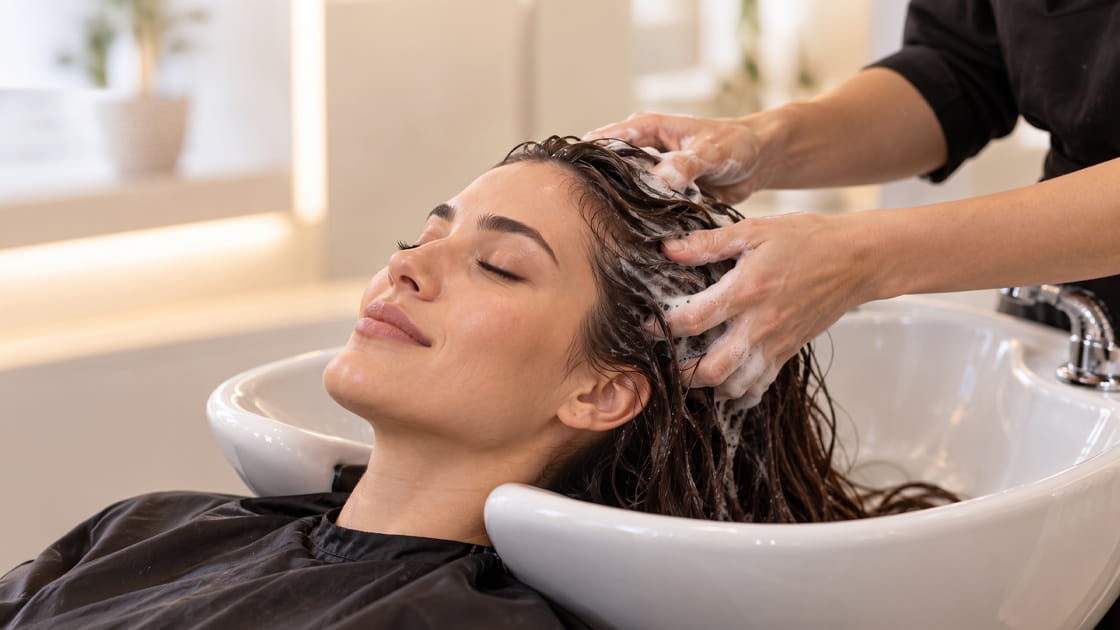
A sulfate-free shampoo is a shampoo formulated without sulfate-based surfactants, such as sodium lauryl sulfate and sodium laureth sulfate, in its cleansing system. It removes oil, dirt, and product buildup from the scalp using various cleansing ingredients. The fact that it does not contain sulfates does not mean the product lacks cleansing properties. The amount of lather, the sensation it leaves during washing, and the appearance after rinsing may vary depending on the alternative ingredients used and the formula as a whole.
When choosing a shampoo, it is not enough to focus solely on the “sulfate-free” label on the packaging. The scalp’s oiliness, the dryness of the hair strands, whether the hair is colored, and washing habits should all be considered together. Two products marketed as having the same properties may produce different results on the hair because they contain different cleansing and conditioning ingredients.
What Is the Purpose of Sulfates in Shampoos?
Sulfate-based surfactants used in shampoos help remove oil and dirt that water alone has difficulty washing away. These ingredients are part of a cleansing system that makes it easier to rinse away oily residues along with the water. Sodium lauryl sulfate and sodium laureth sulfate are examples of ingredients you might see on ingredient lists. Because they also contribute to foam formation, they can make it easier to feel the product spreading across different areas of the hair during washing.
How the cleansing effect is felt on the hair does not depend solely on the presence of sulfates. The amount used, the blend with other surfactants, and the conditioning ingredients in the formula also influence the result. Therefore, it cannot be said that every sulfate-containing shampoo will dry out the hair or irritate the scalp. A product’s suitability should be evaluated based on the feeling of cleanliness after use and the hair’s specific needs.
What Are the Differences Between Sulfate-Containing and Sulfate-Free Shampoos?
The key difference between the two types of shampoo lies in the surfactants used for cleansing. The difference between sulfate-containing and sulfate-free shampoos may also be evident in the amount of lather or the feel of the wash; however, these characteristics vary from product to product. While some sulfate-free formulas produce less lather, others may create a noticeable lather. Similarly, whether a product provides a deep cleanse or a gentle washing sensation cannot be determined solely by which category it falls into.
A sulfate-free product should not automatically be considered natural, organic, fragrance-free, or suitable for sensitive scalps. Similarly, a product containing sulfates should not be viewed negatively solely because of this characteristic. When making comparisons, factors such as cleansing needs, frequency of use, and how the hair feels after washing should be taken into account. Expectations such as the hair being easy to comb or not feeling heavy are also closely related to the formula’s other ingredients.
What Is the Purpose of Sulfate-Free Shampoo, and Who Is It Suitable For?
Developed without the use of sulfate-based cleansers, these products effectively cleanse the hair and scalp. People who experience dryness or stiffness after washing, in particular, may want to consider options formulated for gentler cleansing. For dry, curly, or chemically treated hair, it’s important to consider how the product feels on the hair strands while cleansing. However, suitability depends more on the characteristics of the chosen formula than on the absence of sulfates.
For colored hair, use products specifically formulated to preserve color; for chemically treated hair, follow the care regimen recommended by the professional who performed the treatment. People with oily scalps can also use sulfate-free options that provide adequate cleansing. There is no single type of shampoo that is mandatory for every hair type. The right choice is determined by whether the scalp feels clean after washing and whether the hair strands receive the care they need.
How Can You Tell If a Shampoo Is Sulfate-Free?
The phrase “sulfate-free” on the packaging can provide initial information; the list of ingredients should be examined for a more detailed assessment. Among the INCI names used in cosmetic products, names such as Sodium Lauryl Sulfate, Sodium Laureth Sulfate, and Ammonium Lauryl Sulfate are examples of sulfate-based cleansers. Looking at the full names of the ingredients rather than just searching for the abbreviations SLS and SLES ensures a more accurate reading of the label.
Terms such as “plant-based,” “keratin-based,” “professional,” or “sulfate-free” do not, on their own, indicate that a product is sulfate-free. Similarly, the presence of “sodium” in the name of an ingredient on the ingredient list does not mean that the ingredient is a sulfate. The packaging claims and the ingredient list must be evaluated together. If this feature of the product is not explicitly stated, you should check the manufacturer’s product description rather than making a decision based solely on the product’s name, scent, or lathering behavior.
Are Sulfate-Free Shampoo and Salt-Free Shampoo the Same Thing?
The terms “sulfate-free” and “salt-free” do not describe the same characteristic. While “salt-free” generally indicates that sodium chloride has not been added to the formula, “sulfate-free” refers to the absence of sulfate-based cleansers. Therefore, a “salt-free” product may contain sulfates, and it cannot be assumed that a “sulfate-free” product does not contain sodium chloride. Those looking for both characteristics should check the packaging description and the list of ingredients separately.
How Do You Use Sulfate-Free Shampoo?
After thoroughly wetting the entire hair and scalp with lukewarm water, apply the amount of product recommended on the package. Distributing the shampoo first onto the scalp and gently massaging it in with your fingertips helps the cleanser reach the areas that need it. Avoid scrubbing vigorously with your fingernails or washing by rubbing the lengths of your hair together. For thick-consistency products, adding a small amount of water during application can make it easier to distribute; However, the product’s own instructions for use should be followed.
Make sure no product remains on the scalp or between the strands of hair during rinsing. A second wash is not necessary every time; consider the level of oiliness, the amount of product buildup, and the instructions on the packaging. If your hair feels tangled after washing, you can complete your routine with a hair conditioner suitable for your needs. Rather than following a fixed schedule that applies to everyone, you should base your washing frequency on your scalp’s need for cleansing.
Does the Low Lather of a Sulfate-Free Shampoo Affect Its Cleaning Power?
A lack of lather does not, by itself, indicate that the hair has not been cleaned sufficiently. The amount of lather can vary depending on the surfactants used, the oiliness of the hair, and the properties of the water. Rather than using more product than necessary to produce more lather, it is important to distribute the shampoo evenly over the scalp and rinse it thoroughly. When assessing cleanliness, one should focus on the residual oil and product buildup after washing rather than on the volume of lather.
What Should You Look for When Choosing a Sulfate-Free Shampoo?
Product selection should begin by assessing the needs of the scalp and hair strands separately. While the scalp may become oily quickly, the ends may be dry; in this case, simply looking for a product labeled for dry hair may not be sufficient. The cleansing system, conditioning ingredients, fragrance preferences, and usage instructions should all be considered together. Since the absence of sulfates does not guarantee that a product will produce the same results for everyone, the selection should also be informed by personal experience with the product.
When comparing different options, you can review the product descriptions in the Morfose shampoos category and verify that the product you’ve chosen is sulfate-free by checking its current packaging. The characteristics of a single product in a line should not be generalized to the entire line. You can evaluate your choice by observing results such as how clean your hair feels after use, how easily it styles, and whether it feels heavy. Adjusting the amount of product and the frequency of washing according to your needs is also part of establishing a suitable routine.