
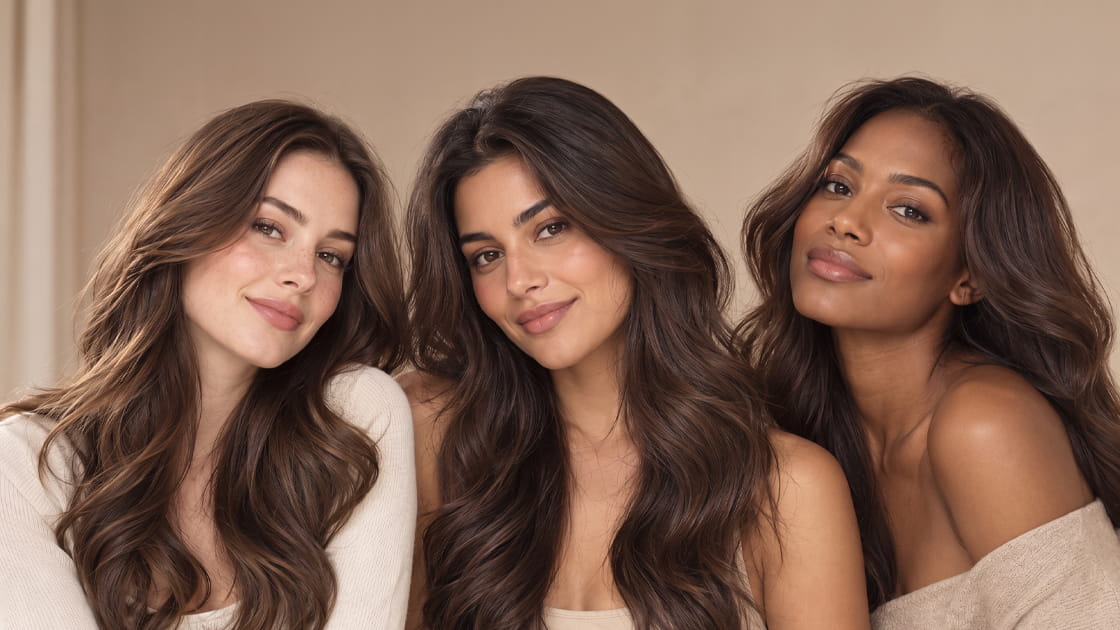
Chocolate brown hair color, which combines the depth of brown with soft highlights, can complement fair, wheat-colored, and dark complexions. When determining the right shade, it’s not enough to consider skin tone alone. You should also take into account skin undertones, natural eyebrow color, eye color, and the contrast you want to create on your face. The same shade of brown can appear warmer, darker, or more pronounced on different people.
Those looking for a natural change can opt for shades close to their current hair color, while those seeking a more eye-catching look can consider dark chocolate shades. The key here isn’t to find a single “right” color for everyone. By choosing the warmth and depth you want to see around your face, you can achieve a result that suits your personal style.
What Kind of Color Is Chocolate Coffee Hair Color?
Chocolate brown is a color family that can feature warm, neutral, or slightly cool undertones against a brown background. It offers a range of looks, from lighter shades reminiscent of milk chocolate to deeper tones reminiscent of dark chocolate. While warm shades may feature more pronounced golden and reddish undertones, neutral shades emphasize a balanced brown appearance. Therefore, making a choice based solely on the color name can be misleading.
When choosing a shade, you should compare the sample on the color chart with your current hair color. The same shade may appear lighter on natural hair and look different on dark or previously colored hair. When browsing the Morfose hair color category, discussing the lightness level and highlights of the shade you like with your stylist will help you describe your desired look more clearly. Considering how the color will look on your current hair color-rather than relying solely on the image on the box-will give you a more realistic expectation.
Which Skin Undertones Suit Chocolate-Brown Hair?
Warm, cool, and neutral skin undertones can all complement chocolate brown; what matters is the undertone of the brown itself. A golden-based shade adds warmth around the face, while a more neutral option can create a balanced frame. However, these pairings based on undertone are not set in stone. Your preferred makeup style, the color of your eyebrows, and your personal taste also influence the overall look.
When assessing your skin’s undertone, instead of relying solely on the color of the veins on your wrist, you can examine how your face looks next to different colors. In natural daylight, without heavy makeup, comparing warm- and cool-toned fabrics held close to your face can be a good starting point. Holding strands from a hair color chart up to your face makes it easier to assess how your preferred shade of brown will look against your skin.
Which Chocolate-Brown Shades Suit a Warm Skin Undertone?
For skin tones with prominent golden, peach, or yellow undertones, warm chocolate-brown shades can create a harmonious look. Brown shades with subtle caramel undertones may appeal to those seeking a brighter look. If you don’t like intense copper or red undertones, you might consider options with more subtle warmth and a more pronounced brown base. Examining how the shade you choose frames your face in natural light will make your decision easier.
Which Chocolate-Brown Shades Suit Cool and Neutral Skin Undertones?
Neutral or slightly cool chocolate browns can look balanced in cool undertones, where pink or bluish undertones stand out. With neutral undertones, however, you can more easily choose between warm and cool options based on personal preference. If you don’t want a look that’s too ashy, you can opt for a shade that preserves the depth of the brown without letting the cool undertones dominate.
Does Chocolate-Brown Hair Suit People with Fair Skin?
For those with fair skin, chocolate-brown hair can create a contrast that accentuates facial features. Those who prefer a softer transition may want to consider medium-light neutral or milk chocolate tones. Darker shades, on the other hand, can accentuate the contrast between your hair and skin, creating a more striking frame. Which effect you prefer is just as much a part of the decision as your skin tone; having fair skin doesn’t necessarily mean you have to choose a light brown shade.
When choosing a shade that suits fair skin, it’s helpful to also consider the lightness of your eyebrows. The contrast between very light eyebrows and quite dark hair can appear sharper than desired for some people. If you don’t want this result, you can choose a chocolate shade that doesn’t stray too far from your natural color. Additionally, comparing different shades of brown next to your face—without letting temporary redness on your skin interfere with your undertone-provides a more accurate visual assessment.
Does Chocolate-Brown Hair Suit People with a Wheat-Colored Complexion?
For wheat-toned skin, chocolate-brown shades can create a natural-looking harmony. Medium-toned browns can frame the face without creating a stark contrast between the hair and skin. However, the term “wheat-toned skin” does not necessarily imply warm undertones on its own. Since your skin may have cool or neutral undertones, comparing a caramel-based shade with a neutral chocolate-brown will help you determine which look suits you best.
If you’re looking for a brighter look, you can explore options that preserve your brown base while adding subtle warm highlights. For a calmer and more balanced look, you can opt for neutral tones. If your natural hair color is already brown, simply changing the highlights without making a drastic change in shade may be sufficient. When making your decision, hold a strand of hair next to your face and evaluate it alongside your eyebrows and the skin tone on your neck-this will help you see how well it complements your features.
Does Chocolate-Brown Hair Color Suit People with Dark Skin?
On olive skin tones, chocolate brown can create a cohesive look, especially when chosen to match the natural hair color. Deep browns reminiscent of dark chocolate maintain harmony with dark eyebrows, while medium-dark shades can create a more noticeable change in hair color. It should not be assumed that all dark complexions necessarily have warm undertones. The effect of the same brown shade can vary depending on whether the skin has warm, cool, or neutral undertones.
If you don’t want your hair to blend in too much with your skin tone, you might consider chocolate shades that create a bit of contrast around your face. If you’re looking for a more defined and deeper look, darker shades may be a good choice. However, you don’t have to limit your color choice solely to the expectation of making your skin appear lighter. By considering your natural eyebrows, your everyday style, and the level of change you want to see in your hair, you can choose a shade that makes you feel more comfortable.
How to Choose a Chocolate-Brown Hair Color Based on Eye Color?
With brown eyes, chocolate tones can create a harmonious look; honey or gold highlights in the eyes can appear more striking when paired with light, warm browns. For hazel and green eyes, warm chocolate shades can accentuate the contrast between the colors. For blue and gray eyes, dark or neutral browns can provide a distinct contrast. These serve as starting points to simplify your visual choice; eye color alone is not the sole criterion for selection.
When making your final decision, consider how the shade that makes your eyes stand out complements your skin undertone and eyebrows. Comparing different swatches using photos taken under the same lighting without filters can help you narrow down your options. If you don’t like warm undertones, you don’t have to choose a shade just because it matches your eye color. Achieving the balance you love across your entire face is more important than sticking to a single shade of brown recommended for a specific eye color.